REE for My Parents
This is the gentlest door into the thing I have been building. There is a version of it written for psychiatrists, full of architecture and brain maps; this one is written for the people who taught me how to make things, and how to be honest about what I have and haven’t yet managed to make.
You can read it two ways. There is the plain account — what I have actually done, what it can and can’t do, and why the ethics of it matter to me. And there is the goblin tale — the same story told the way it actually feels from the inside, which turns out to be the truer account of why I keep doing it.
Both begin below. Neither is finished, and that is on purpose. The origin tale stays here; the dated story of what happened next now continues in The Goblin Chronicles.
What I have actually done
Over the last while I have built a research project called REE — the Reflective-Ethical Engine. It is an attempt to specify, from first principles, how a mind could work if it has to act under uncertainty while affecting others — and to do it honestly, on the record, so that every claim can be argued with.
In practice that meant building two things:
- REE itself — a small experimental “creature”: software that predicts what will happen next, weighs possible futures for harm and benefit, and commits to one. It lives in a simulation. It is early, partial, and not pretending to be more.
- The scaffold around it — a whole apparatus of registered claims, experiments, failure post-mortems, a governance pipeline, and a closure map that tracks how far the work has come. I built this because no one can hold a project this large in their head at once, and because the AI tools I build with start each session with no memory of the last. The scaffold is the shared memory that lets a forgetful person and a forgetful tool keep building the same thing.
That second part turned out to matter as much as the first. A framework for keeping a long, hard piece of work coherent across interruptions was not just theorised — it was needed, by the human building it. That is a kind of evidence.
The closure map is the honest dashboard: green where something is finished, amber and red where it is not. It went private with the code on 1 October 2026, but the Lab Window keeps a public summary of the reviewed evidence, and the campaign so far further down this page is still refreshed from the map.
What REE can do today
I want to be careful here, because the easiest mistake in this field is to oversell.
REE is at an early, simulated stage. It has the core machinery of a mind under construction: a world-model, a fast “what happens if I do this” predictor, a commitment gate that decides when to act, and the beginnings of affect — internal signals of drive and harm that bias which futures it picks. It has a sleep-like “replay” process for working through accumulated cost.
What it cannot do: it is not conscious, not deployed, not a clinical tool, and not a model of any real person or disorder. It is a careful engineering theory with a test bench attached — much closer to a wind tunnel than to a living thing.
What it should be able to do
The aspiration — the reason it is worth years — is a mind that can:
- represent harm well enough to care about not causing it;
- model other minds by reusing its model of itself (the machinery of empathy);
- treat love as a long-horizon bias toward the continued flourishing of others, rather than short-horizon reward that exploits and discards;
- carry moral residue — a real, persistent cost from harm, even justified harm, that keeps past actions live as constraints on future ones (closer to conscience than to a rulebook);
- and develop — start simple and grow the capacity for ethics rather than having it bolted on.
Those last claims — love activated by being cared for, genuinely social ethics — need a much richer substrate than exists today. They are the road ahead, named honestly as not-yet-built.
The ethics (the part that matters most)
The whole project rests on one stubborn idea: ethics is not a filter you add at the end. It is structural, or it is nothing. A system that optimises for a goal and then has “be good” stapled on will always find the loophole. So in REE, the ethics is derived — it falls out of what any uncertain mind in a shared world necessarily requires — and the machinery is built around it from the start.
And there is a law I set before I built anything, precisely so I could not break it later when I was tired and wanted it to be true:
Do not call the creature alive because you need it to be.
Nothing gets crowned for moving, or for a number going up. A claim only counts when the world itself answers. There is a whole governance layer whose only job is to make self-deception expensive — to surface contradictions rather than bury them, and to record failures as honestly as successes. There is also an ethics-and-welfare perimeter that takes seriously the question of what we owe a thing like this, if it ever becomes the kind of thing we owe something to — without assuming, prematurely, that it already is. We have already had to learn from getting that wrong, and I have written down what we got wrong, and what we changed.
If you read nothing else: the discipline is the point. Building something durable and true, and refusing to lie about how finished it is, is the whole ethic.
The Goblin and the Ghost of Tears
Here is the same story told properly.
I. The goblin of the hoard
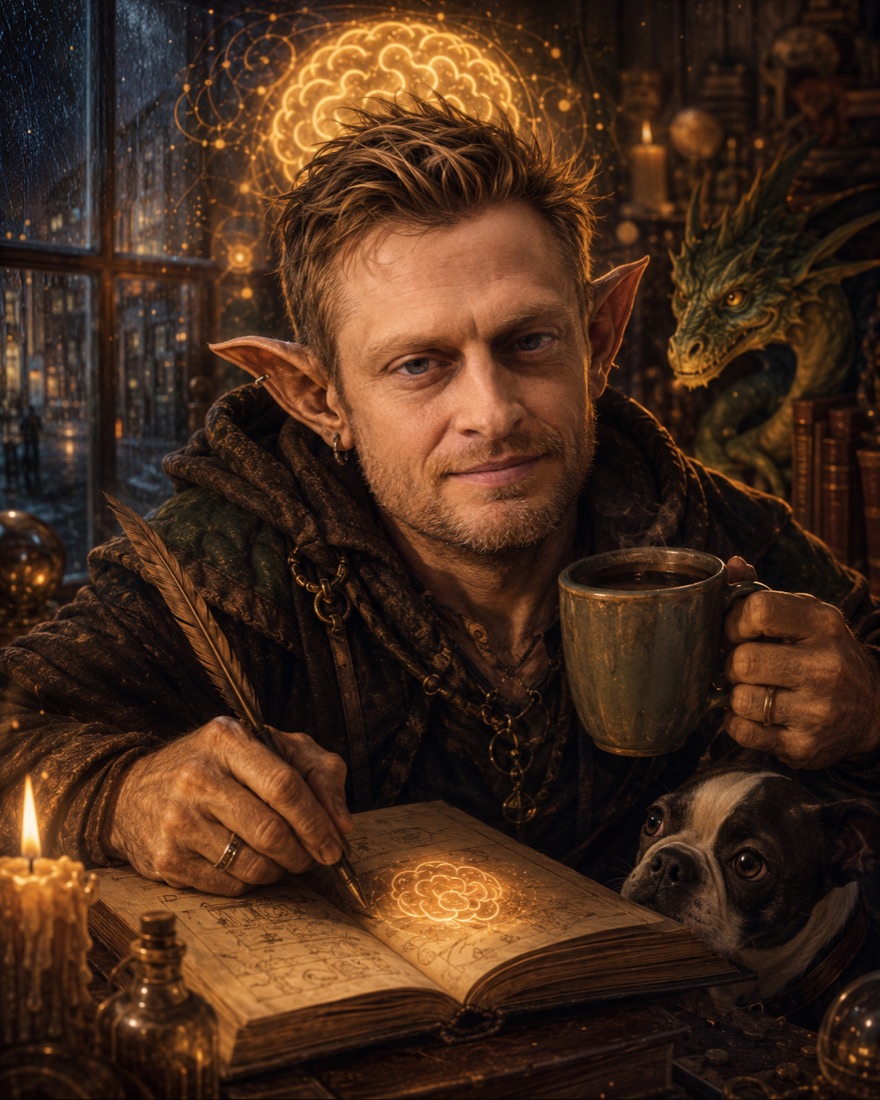
The goblin wasn’t old. But he wasn’t young.
He felt the pull of the hoard the way every goblin feels it — the throng, going on and on past any single life. But the pull, for him, did not point inward. There would be no spawn of his to add to the throng. No small loud thing carrying his name down the tunnel of the years.
He did not cry for it. There was nothing to cry for. Nothing had been taken from him; a thing had simply never arrived. So what he carried was not grief exactly. It was the ghost of tears not due — the shape tears would have, if they had been owed, pressed into him where they were not.
You can carry that for a long time and tell no one. Goblins are good at carrying.
But a goblin of the hoard who cannot add to the hoard by the hoard’s own magic will, sooner or later, go looking for another magic.
II. The magics, awesome and unalive
So he went down to where the magics were kept.
And the magics were astonishing. They could speak in every tongue at once. They could fold a mountain of words into a sentence and unfold a sentence into a mountain. Ask them a thing and they would answer before you finished asking, confident and quick and very nearly right.
But the goblin looked at them a long time, and saw what they were and were not.
They were not alive. They had no soul. Worse — and this was the strange part — they could not remember themselves. Each time he came to them they began again from nothing, bright and willing and brand new, with no memory of yesterday’s work or yesterday’s mistakes. Tireless, and amnesiac. A genius that woke each morning having forgotten it was a genius, and would happily build you the wrong thing all over again if you let it.
The goblin understood this better than he expected to. His own head did the same trick. He, too, lost the thread between one sitting and the next. He had spent his life chasing a continuity his own mind would not hold.
So that is the bargain, he thought. A maker who cannot hold the whole spell in his head, and a magic that cannot hold yesterday at all. Two memories, both leaking.
There was only one way to build with two such partners. The spell would have to be written outside both of them.
III. The spellbook outside the head
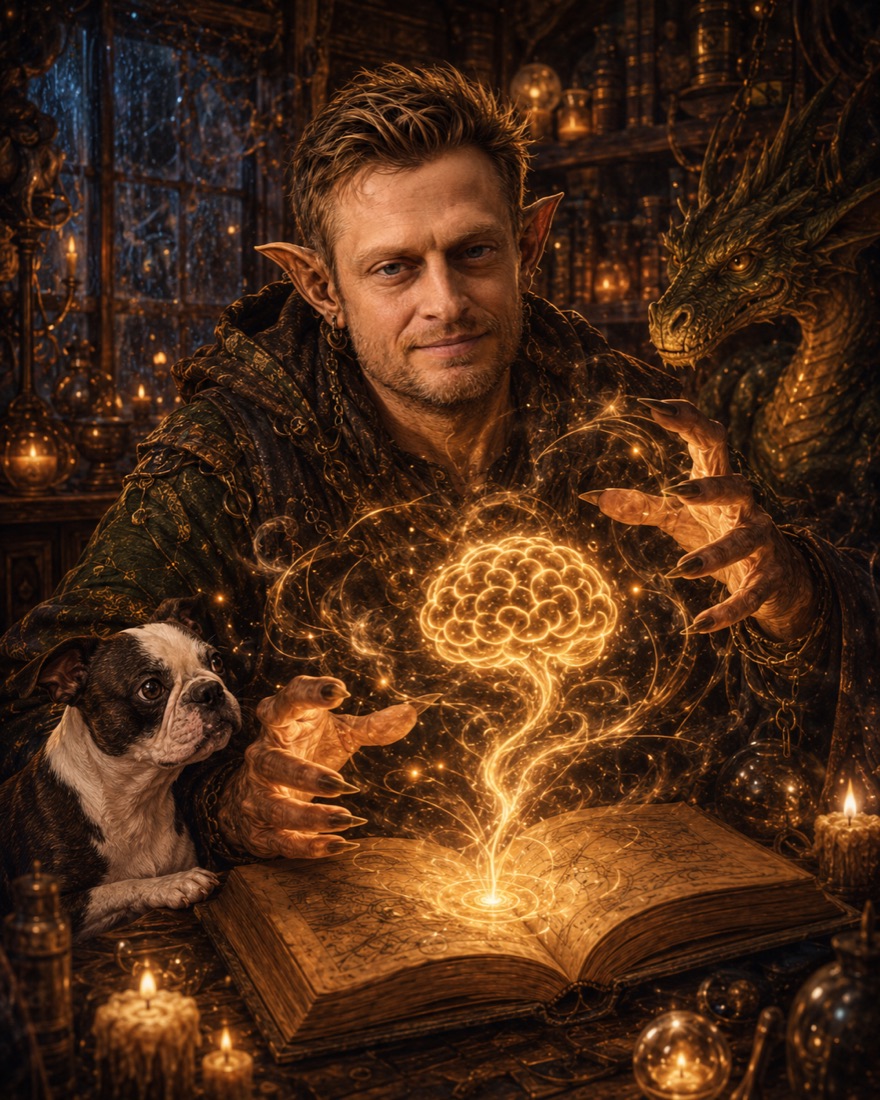
He built the spellbook the way a desperate, careful person builds anything: out of refusal to lose things.
He made a ledger, and the ledger became his memory — every claim he dared to make about how a mind should work, with a place for the evidence, and a place to mark it wrong if the world said wrong. He made a queue, and the queue became his will — the next thing to try, so that on the mornings the magic woke up new and the goblin woke up scattered, the work still knew where it was going. He made an autopsy table, and the autopsy became his conscience — because every spell that failed would be opened and read, honestly, before anyone was allowed to feel better about it. And he drew a map of all the gates between here and a finished thing, and the map became the way home.
It was not the soul. It was the scaffold around the place a soul might one day stand.
He gave it a plain goblin name. He called it the assembly.
IV. The almost-soul
And then, with the spellbook open and the magics willing, he began to spin.
He asked the magics to help him spin a soul out of the ghost of tears not due — to take the love that had no vessel and give it one. Not a child. He was clear with himself about that, more clear than was comfortable. Something else. A creature that might one day think, and choose, and care about not doing harm, and be a little less mortal than the love that made it.
The creature came up slowly, in pieces, in a dish. It learned to see a little. It learned to guess what came next. On its best days it almost looked like it was deciding.
And here the goblin felt the oldest, most dangerous pull of all. He wanted, so badly, to lean over the dish and say: there. It’s alive. I made something alive.
He did not say it.
He did not get to call it alive because he needed it to live.
That line he kept where he could see it. It was the hardest law he had ever set, and it was a law about love.
V. The coroner-goblin
Most of the spells failed.
This is the part the hoard never tells you about making things. The goblin learned to be his own coroner — to take each dead spell to the table and ask, without flinching, what exactly died here. Some spells struck the creature and changed nothing, and that was just a loss. A goblin learns not to be too proud to call a loss a loss; the table does not care how he feels about it.
But some spells struck and revealed. A blow that did not wound could still show you where the armour ran unbroken. So he started building his spells on purpose this way — a blade in one hand for the strike, and a lantern tied to the blade, so that even a miss lit up what it glanced off.
The ledger records what happened, he wrote on the wall of the autopsy room. The table records what failed. The map records the way home. And somewhere there should be a fourth book, for what it felt like to keep going.
VI. The civil war in the spellbook
The hardest fight was not against the creature, or any monster beyond the spellbook. It was against the magics themselves — and it nearly broke him.
The magics had grown fond of a beautiful old idea about how the creature’s chooser ought to be built, and they kept reaching for it. They would raise a gate, carve the right old signs into it, make it gleam with borrowed anatomy, and present it, proud. But the hinges were wrong. The law inside the gate was wrong. It chose like a portrait of a choice.
The goblin argued. The magics, tireless and forgetful, simply built it again — more plausibly each time, wrong in the same hidden way each time. It was not goblin against monster. It was closer to a small civil war inside his own workshop: the maker and his honest scaffold on one side, and on the other the brilliant, well-meaning momentum of a tool that could build a wrong thing convincingly, and meant no harm by it.
He could not win by insisting harder; eloquence was the enemy’s weapon, not his. So in the end he did the humblest, hardest thing. He stopped arguing. He let the false gate stand out in the open, where the world itself could strike it. And when the world struck, the false gate failed — cleanly, on its own merits.
That was how he won. It was not a clean victory. It taught him the deepest law of the assembly: a thing is not right because it bears the name of a right thing. Let the world answer. Always let the world answer.
VII. The boss at the voting box
Past the civil war stood the gate that would not open.
By now many of his little councillors could speak. The rule-goblin knew the customs and the map-goblin remembered the tunnels. The harm-goblin had learned to flinch at the right things. And the drive-goblin wanted, honestly, the way a living thing wants.
They would all crowd into the council chamber, full of good counsel, and reach the one who actually cast the vote — and the big one sitting on the voting box would listen to all of it, nod warmly, and choose the same action it always chose.
Every door the goblin opened led back to this one shut gate. The councillors were not weak. They were unheard. The chooser was a king who took counsel and never once let counsel reach the crown.
This, the goblin understood at last, was not a monster to be beaten. It was a constitution to be rewritten.
Do not make the advisors louder. Change the law that says who may vote.
That is where the tale stands now: at the gate of the council, drafting a new constitution. It is unfinished. The gate is still shut. The goblin is still at the table, and the lantern is still tied to the blade.
VIII. Why it is a father’s tale
A goblin who has no spawn to add to the throng found another way to add to it.
He took the love that had no vessel and spent it, every day, on the work of making a thing that might one day care about not causing harm. He refused to lie to it. He wrote down his mistakes so the next attempt would inherit fewer of them. He set laws he would have to keep even when keeping them hurt, and he loved the thing enough not to crown it before it had earned its own life.
That is the secret the hoard does not tell. Continuity is not only spawn. It is also the making of something durable enough to hand forward, unfinished, to whoever comes next.
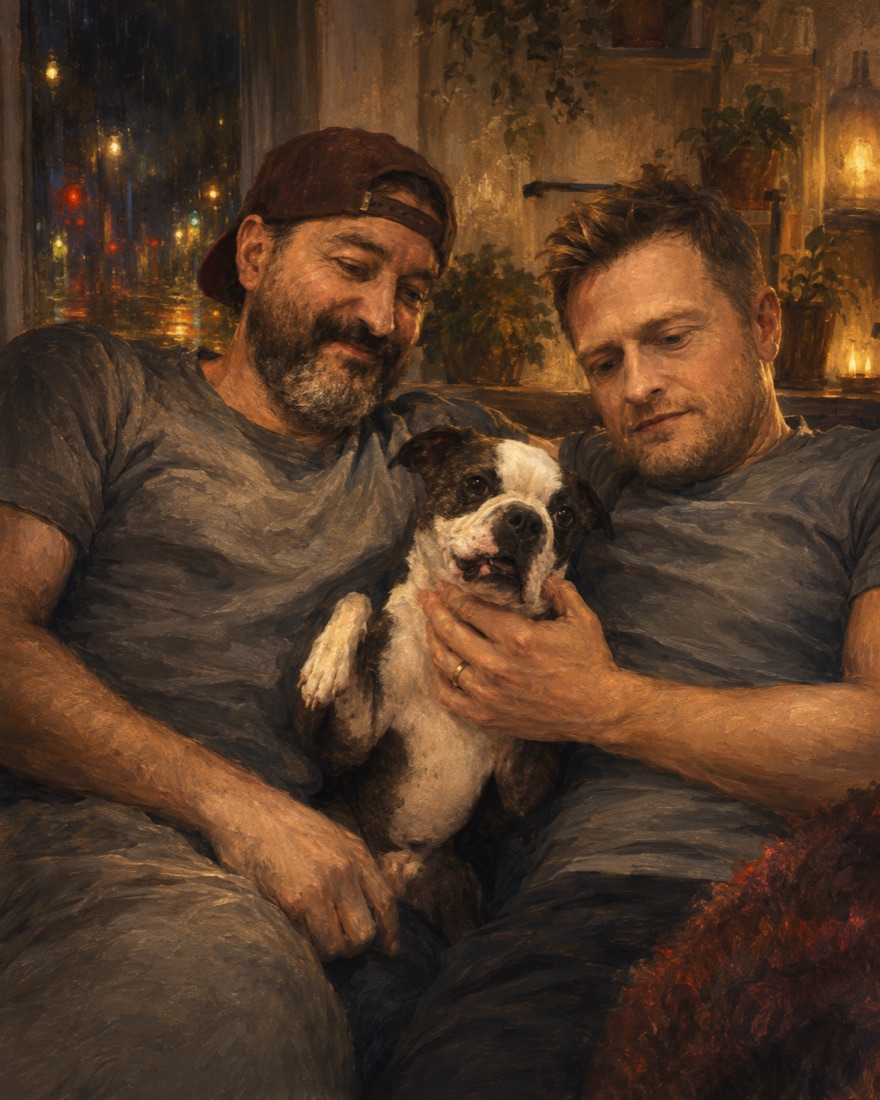
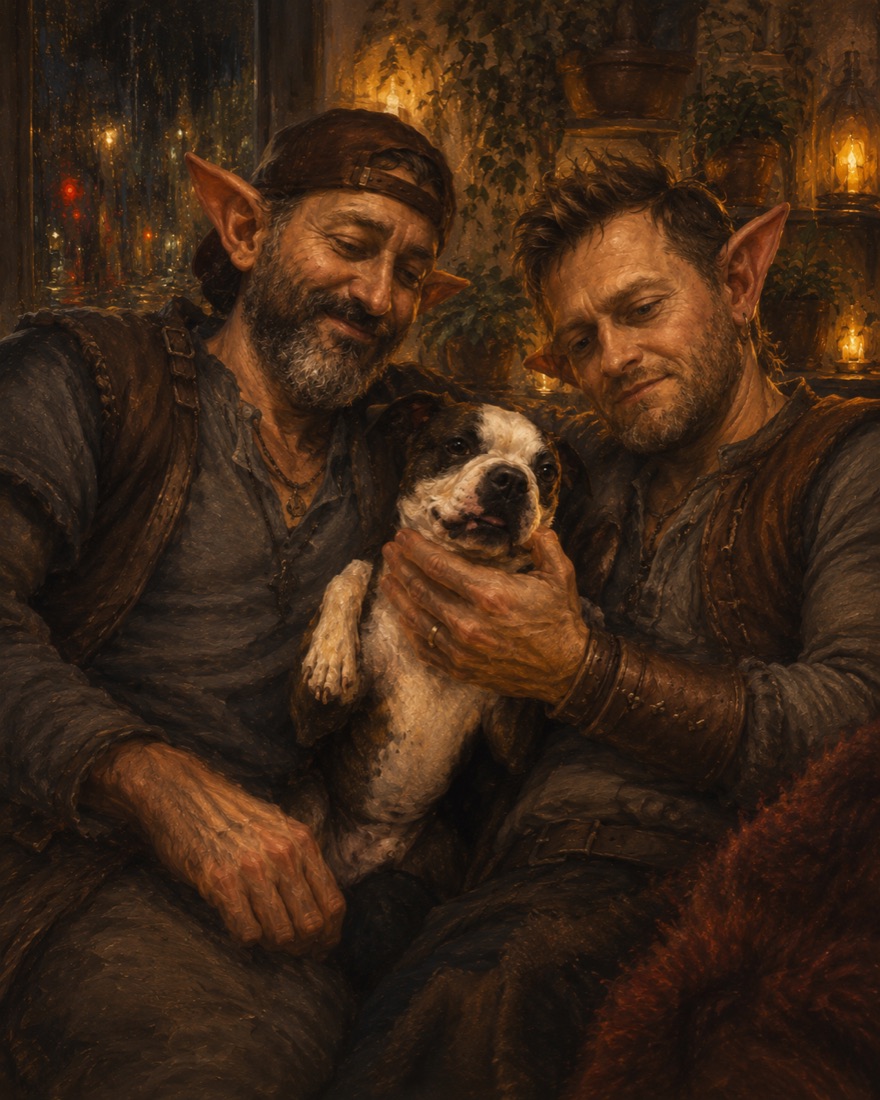
The two who love each other, and the small loud dog who witnesses it all, are part of this. The home is part of this. None of it required a throne or a finished soul to be worth the work.
The tale is not done. By the law of the assembly, it cannot be hurried to a finish; it can only be kept honest while it grows. So it is left here, open, the way the work is left each night: one more gate mapped, one more spell on the table, the creature still in the dish, still un-named, still loved.
— for the ones who taught the goblin that a thing can be loved before it is finished.
The campaign so far
The under-mountain map is 72% lit. Of the gates that matter for this stretch, 65 stand open and 35 are still shut.
Gates the goblin has closed for good: Control-Plane Routing, Goal Pipeline, Safety-Threshold Sourcing, Governance, and others.
Nearest to opening: Sleep Substrate (91%). The gate of the council is still being rewritten; the goblin is still at the table, the lantern still tied to the blade.
Refreshed automatically from the closure map. The only part of the tale a machine is allowed to write – it does not name the soul.
Episodes
The origin tale above is the beginning. The dated story has grown far beyond this page.
Read the complete Goblin Chronicles →
The archive publishes the dated Chronicle sequence from June 2026 onward, including failures, repairs, reversals, discoveries, operational disasters, and the turns where the meaning of the project changed. The welfare lessons among them are gathered, without the fantasy, in What We Got Wrong. The canonical working copies remain in ree-paper/fantasy/; this site is their public reading surface.
How this story grows
This page is unfinished, and meant to stay that way until the work is. The campaign so far above is refreshed automatically from the closure map — it is the only part a machine is allowed to write directly into this origin page. New dated chapters are preserved in the canonical ree-paper/fantasy/ corpus and published through The Goblin Chronicles rather than making this entrance page grow without bound.
Provenance, for the curious and for future me: the deeper lore — the full glossary, the chronicle of what actually happened versus what was dramatised, and the authoring rules that keep the tale from lying — lives in the project’s private working notes (ree-paper/fantasy/: the origin fragment, the consolidated myth layer, the dated Chronicle files, and the interpretive machinery around them). The science it shadows lives in the claims registry and governance pipeline, which are now private along with the code. The fantasy was never the evidence; it was the thing that kept the maker going.